
Growth is not always the goal
In the nonprofit and development space, growth is often seen as a clear sign of success. More programs = More reach = More activity.
From the outside, it can seem like forward momentum should always look like expansion. But in practice, building something that lasts often requires a different kind of discipline. Sometimes, the most responsible step is not to grow, but rather, it is to slow down.
The pressure to keep expanding
Many development organizations operate under a quiet but persistent pressure to continue growing.
That pressure can come from multiple places:
- The desire to meet real and urgent needs
- Expectations from donors and supporters
- The visible success of expanding programs
- A natural belief that more activity equals more impact
In many ways, these motivations are understandable. The needs and the opportunities to help are both real, but growth also carries weight.
Every new program adds cost, complexity, and long-term responsibility. Over time, expansion without careful alignment can begin to stretch an organization beyond what is sustainable.
When growth begins to create strain
Development work is built on systems which include people, infrastructure, funding, and long-term commitments. When growth outpaces those systems, strain begins to show.
This can happen when:
- Costs rise faster than funding
- Programs require more staffing than originally planned
- Infrastructure is stretched across too many priorities
- External conditions change, including inflation and shifts in donor behaviour
In recent years, many organizations have felt these pressures more acutely. Rising global costs have affected everything from food to operations. At the same time, the donor climate has shifted, requiring organizations to think carefully about how resources are used and sustained over time.
These are simply the realities of operating in a complex and changing environment.
What it means to slow down
Slowing down does not mean stepping away from the mission or abandoning long-term goals. In many cases, it means something more intentional such as narrowing focus, reducing strain and making decisions that protect the core of the work.
In some situations, this includes temporarily downsizing certain programs or areas of operation in order to strengthen overall sustainability.
This kind of decision is not about doing less for the sake of doing less. It is about ensuring that what continues is strong, stable, and aligned with the organization’s purpose.
At Project Canaan in Eswatini, this reality has become increasingly clear as the organization has grown.
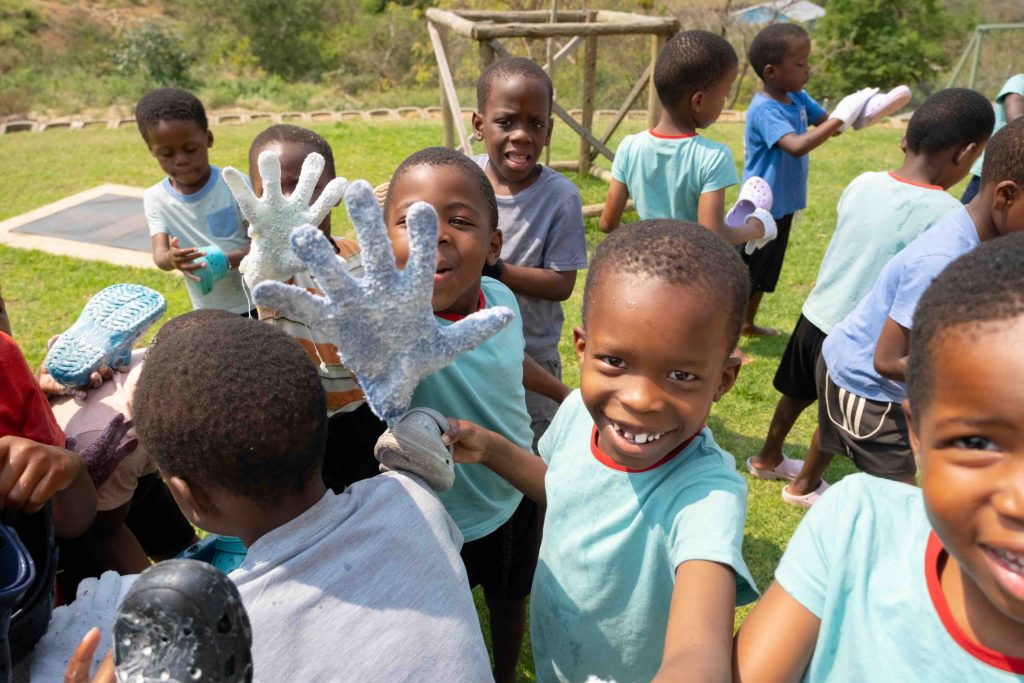
Today, 460 children are in care, each supported through children’s homes, caregivers, education, and daily provision. That level of care requires consistent growth, evolution, system expansion and budget allocation to reflect all of these ongoing changes.
At the same time, broader economic factors have an impact. Rising food prices, operational costs, and shifts in donor patterns all influence how an organization can responsibly move forward.
In this kind of environment, leadership decisions become more complex. In some areas, this has meant temporarily downsizing certain programs in order to reduce financial strain and refocus on the most critical priorities.
The primary focus remains clear: ensuring that the children in our care continue to receive stable, consistent, long-term support.
What this means for Canadian supporters
For Canadian supporters, these kinds of decisions are an important part of responsible nonprofit leadership. In a season where both global costs and local economic pressures are increasing, transparency matters.
Understanding that organizations may need to adjust, refocus, or temporarily reduce certain areas of work helps build a more realistic picture of how long-term impact is created.
It also reinforces an important principle: Sustainable impact is not built by expanding at all costs. It is built by aligning resources, priorities, and long-term commitments in a way that can be maintained over time.
Learn more
If you would like to learn more about how long-term care is being developed and sustained at Project Canaan, we invite you to explore the work of Heart for Africa (Canada) by clicking the link below.
Understanding the model is an important first step in understanding the impact.