
Most nonprofit organizations are built on a familiar financial model. They rely on donations, grants, and fundraising to support their work. While some organizations generate revenue through products or services, the majority remain largely dependent on external giving to sustain their operations over time.
This model is not inherently flawed. In many cases, it is necessary, particularly for organizations providing long-term care, education, or community-based support.
But at the same time, it raises an important question.
What does real sustainability actually look like for a nonprofit organization?
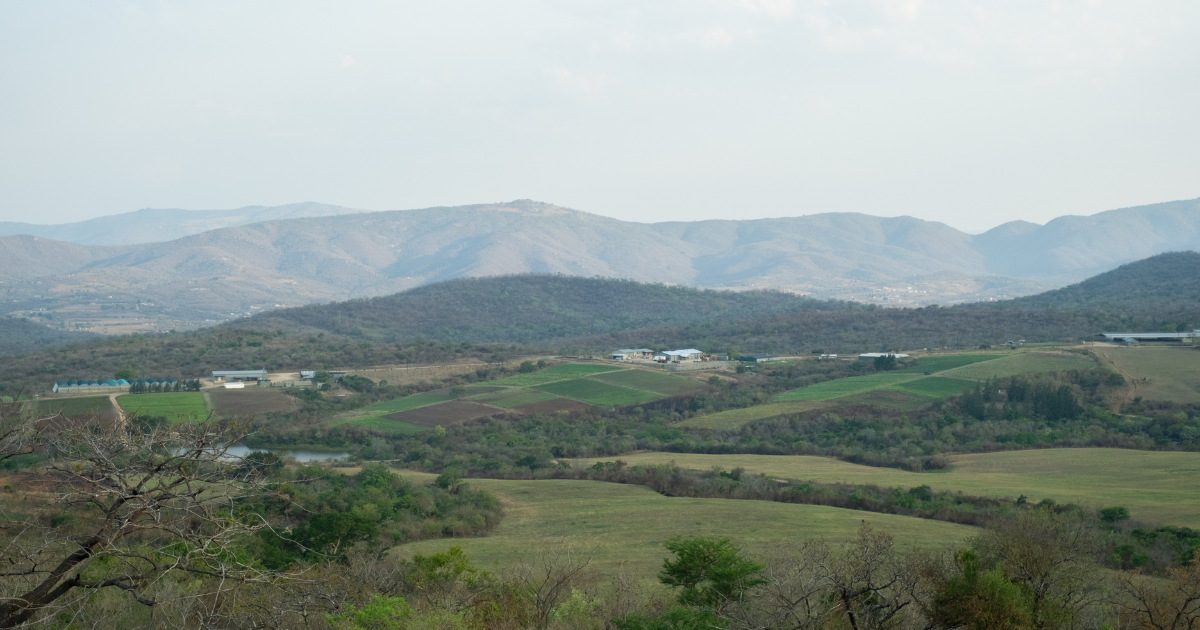
At Project Canaan, Heart for Africa (Canada) has spent years working through that question in a very practical way. From the beginning, the goal has not been to replace donor support, but to use it more intentionally by building something that becomes more stable over time.
Donations remain essential to the work. They support the daily care of the children in our care and the ongoing needs of the community. At the same time, those same resources are being used to build systems, infrastructure, and operations that can gradually reduce long-term dependence on donations.
This reflects a different way of thinking about nonprofit sustainability. It is not about removing donors from the model. It is about strengthening the model so that it becomes less vulnerable and more resilient over time.
How Heart for Africa (Canada) Is Building a Sustainable Nonprofit Model
At Project Canaan, sustainability is not defined by a single program or revenue stream. It is built through a combination of systems that work together to support the long-term needs of the community.
This includes agriculture, food production, employment, vocational training, and the infrastructure required to support these efforts over time.
- Agriculture contributes to both nutrition and cost stability.
- Employment creates meaningful jobs within the local community.
- Vocational training equips individuals with practical skills that can lead to long-term opportunity.
- Infrastructure ensures that these systems can operate consistently and reliably.
Taken together, these elements form a model in which donor support is not only sustaining daily operations, but it is also building long-term capacity.
In this approach, donations are not simply funding what exists today. They are helping to build what will sustain the community in the future.
How Nonprofit and Business Models Can Work Together for Sustainability
Nonprofit organizations and businesses are often discussed as if they operate in entirely separate worlds. In reality, there are important areas of overlap, particularly when it comes to building something that is intended to last.
Strong organizations, regardless of structure, are built on clear vision, disciplined execution, and long-term thinking. They invest in infrastructure before expecting growth, evaluate performance over time, and adjust when outcomes do not align with expectations.
These principles are not exclusive to the private sector. They are relevant to any organization working toward long-term impact.
At Project Canaan, infrastructure has been developed to support agriculture, education, housing, and daily operations. Systems have been put in place to improve efficiency and reliability. Programs have been evaluated and, when necessary, reassessed in order to better align with long-term sustainability.
The difference is not in the discipline – it is in the purpose.
A business measures success through financial return. A nonprofit measures success through mission impact. In both cases, however, the ability to sustain that success depends on the strength of the underlying systems.
The Key Systems Behind Long-Term Sustainability in Nonprofits
Sustainability at Project Canaan is best understood as a network of interconnected systems rather than a single solution.
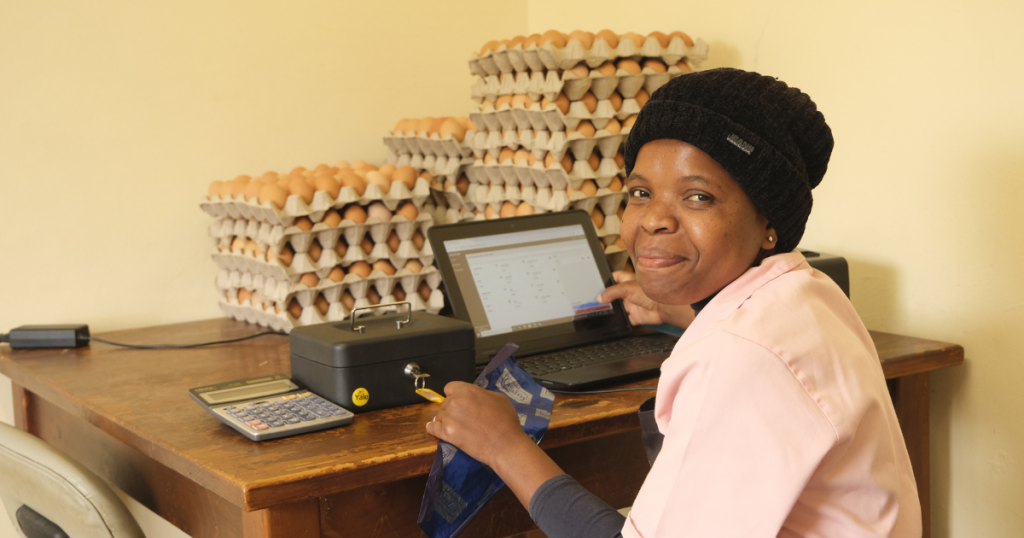
Agriculture and food production play a central role by supporting nutrition while also reducing reliance on external food purchasing. In some cases, these systems also create opportunities for revenue that can be reinvested into the community.
Employment contributes to both operational capacity and local economic stability. Staff members are not only supporting the work of Project Canaan but they are also participating in a broader ecosystem of opportunity.
Vocational training programs extend that impact by equipping individuals with skills that can lead to long-term employment, both within and beyond Project Canaan.
Infrastructure provides the foundation that allows all of these systems to function effectively. Facilities, utilities, and operational systems are often less visible, but they are essential to consistency and reliability.
Each of these components strengthens the others. Over time, this creates a more stable and resilient model than any single initiative could achieve on its own.
Why Revenue Alone Does Not Create True Nonprofit Sustainability
One might assume that generating income is the key to becoming self-sustainable as a nonprofit, but while revenue does play an important role, it is not sufficient on its own.
Revenue must be consistent, aligned with the mission, and capable of covering the full cost of operations. Not all income meets these criteria. Some revenue-generating efforts require significant investment, carry ongoing risk, or do not scale in a way that supports long-term stability.
This is why sustainability cannot be reduced to a single revenue stream.
The focus at Project Canaan has been on building a balanced model in which multiple systems contribute to overall stability. This approach recognizes that sustainability is not about replacing one form of dependence with another, but about creating a structure that is more resilient over time.
The Role of Strategic Discipline in Building Sustainable Nonprofits
Sustainability is shaped not only by what is built, but also by how decisions are made over time.
There have been moments that required careful reassessment throughout our journey to sustainability. Not every initiative develops as expected, and not every system becomes sustainable in its original form.
In those moments, leadership must evaluate what is working, what is not, and where resources can be used most effectively. This kind of discipline is essential.
Building a sustainable nonprofit model requires the willingness to refine strategy, adjust priorities, and make decisions that support long-term impact rather than short-term momentum.
What Real Nonprofit Sustainability Actually Looks Like in Practice
After years of building and refining systems at Project Canaan, a clearer picture of sustainability has emerged.
Real nonprofit sustainability is not defined by the absence of donor support. It is defined by the presence of strong, interconnected systems that reduce vulnerability over time.
It includes diversified sources of support (both internal and external), depends on infrastructure that enables consistent operation, and requires financial discipline and ongoing evaluation. Most importantly, it remains grounded in a clear and consistent mission.
Sustainability, in this sense, is not a fixed endpoint. It is a process that requires continuous learning, adaptation, and long-term thinking.
What This Means for the Future of Sustainability at Project Canaan
The work at Project Canaan continues to evolve as new insights inform future decisions.
The goal remains consistent: To provide long-term care for the children in our care while building a model that supports that care responsibly.
As the organization grows, the focus is on strengthening the systems that create stability and allow the community to function more effectively over time, without losing sight of the mission that guides every decision.
Sustainability is often described as an end state, but in practice it is shaped through ongoing choices, careful evaluation, and a willingness to adapt. At Project Canaan, that process involves refining strategy, improving operations, and learning from experience as the work develops.
Donor support continues to play a vital role in this journey. At the same time, those resources are helping to build a stronger foundation that can support the community in more consistent and resilient ways over time.
If you are interested in learning more about how Heart for Africa (Canada) is approaching long-term sustainability at Project Canaan, we invite you to explore more about the work and follow along as it continues to develop.
These lessons are part of an ongoing journey, and we are committed to sharing what we are learning along the way.