

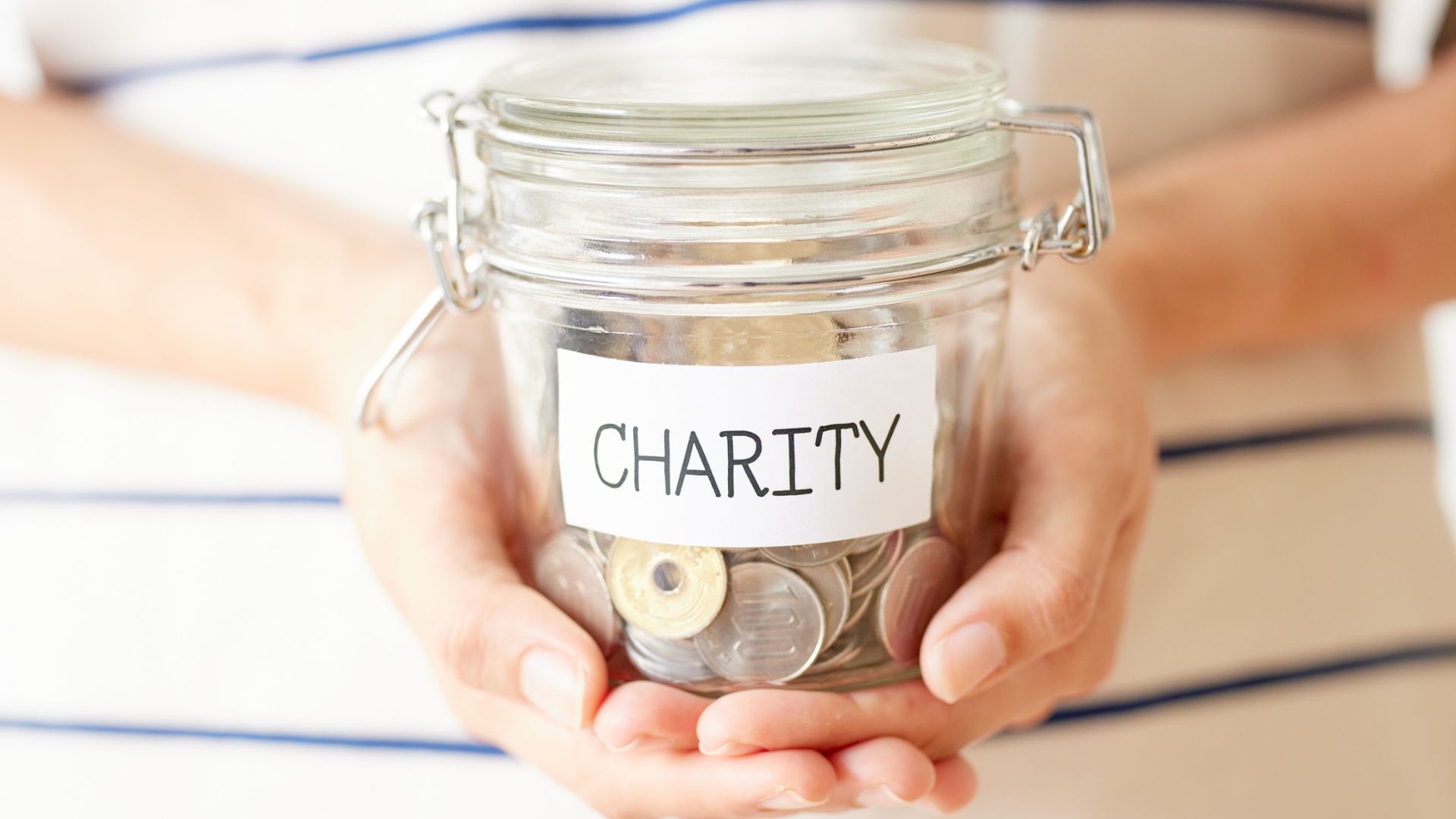
Did you know that Canada has over 86,000 registered charities? They span everything from local food banks to international development organizations, from arts programs to medical research. With so many options, it can be genuinely difficult to find one you feel connected to, confident in, and certain is doing what it claims.
If you’re considering supporting an international charity and wondering whether your donation will actually reach the work, whether the organization is trustworthy, or whether giving internationally is even the right choice, those are exactly the right questions to be asking.
We put together six straightforward questions to help you evaluate any charity you’re considering supporting in Canada. Here is what to ask:
- Is the charity CRA resgistered, and how do you verify it?
- Will I get a tax receipt, and does that change for international giving?
- Should I give locally or internationally?
- How much of my donation actually reaches the work?
- How long has the organization been operating?
- What does long-term impact actually look like, and can you measure it?
Let’s get into it.
1. Is the charity CRA registered, and how do you check?
CRA registration is the starting point. It means the organization has been approved by the Canada Revenue Agency to operate as a registered charity, files annual financial returns, and is subject to ongoing government oversight. It also means your donation qualifies for an official Canadian charitable tax receipt.
Registration alone doesn’t tell you whether a charity is effective, but it tells you the organization meets a basic standard of legitimacy and transparency. Any charity that isn’t registered should prompt serious questions.
The Government of Canada maintains a public, searchable database of every registered charity at canada.ca. You can look up any organization by name, confirm its registration status, and access its financial returns. It takes about two minutes and is always worth doing.
2. Will I get a tax receipt, and does that change for international giving?
A common misconception is that Canadian tax receipts only apply to donations directed at causes in Canada, but this is not the case.
When you give to a CRA-registered charity, you receive an official Canadian charitable donation receipt, regardless of where that charity does its work. You are giving to a Canadian organization, which is legally accountable for how it uses the funds. Whether that organization works in Toronto or somewhere in Africa doesn’t change your tax receipt.
The federal charitable tax credit is 15% on the first $200 donated and 29% on amounts above that. Provincial credits add to this, and the combined benefit typically makes a meaningful difference to the real cost of your gift. A $1,000 donation to a registered Canadian charity can result in a combined credit of $290 or more, depending on your province.
If you’re unsure whether an organization you’re considering is registered, use the CRA search tool mentioned above. A registered charity should also be able to tell you their registration number on request.
3. Should I give locally or internationally?
This is one of the most common questions Canadian donors ask, and it is a completely valid question.
Local giving matters. Research from Imagine Canada shows that local and regional charities have become the top cause area by dollar value among Canadian donors, a reflection of how strongly Canadians feel about the communities around them. If local giving aligns with your values, that’s a completely legitimate choice.
That said, the question of local versus international is ultimately less important than the question of accountable versus unaccountable. A well-run international organization with transparent finances, on-ground presence, local employment, and a long track record can be just as worthy, or more worthy, of your support than a poorly run local one.
When evaluating an international charity, the key things to look for are: Are the founders or key leaders actually present in the country where the work happens? Are local people employed and leading programs? Is there a clear, verifiable track record of results over time? And overall, do you align with the work that the organization is doing? The answers to those questions matter far more than the geography.
4. How much of my donation actually reaches the work?
This is the question most donors ask first, and the sector has complicated feelings about it. The overhead ratio, which measures how much an organization spends on administration versus programs, is the most commonly cited metric. It is also an imperfect one.
An organization that spends almost nothing on administration is often not running effective programs. Skilled staff, financial systems, governance, and communications all cost money, and underfunding them tends to underdeliver on mission. A charity spending 20% on overhead while running excellent, sustainable programs is more valuable than one spending 5% while running programs that don’t work.
Better questions to ask: Is the organization transparent about how it uses funds? Are financial statements publicly available? When programs haven’t worked, has the organization communicated that openly and made changes? Is there a plan to become less dependent on donations over time through earned revenue or commercial activities?
The CRA’s public financial returns are good starting points for understanding how a specific organization allocates its funds. Most reputable charities will also answer direct questions about their finances and having a willingness to do so is itself a positive signal. Plus, many organizations will include their financial statements or annual audits on their website.
5. How long has the organization been operating?
Longevity is one of the most reliable signals available to a donor. It doesn’t guarantee effectiveness, but it demonstrates staying power. Evidence that the organization has survived economic downturns, donor fatigue, leadership transitions, and the kinds of operational challenges that end younger organizations.
ADRA International’s giving guide notes that organizations operating for ten or more years have typically had time to learn from their mistakes, refine their approach, and build a track record you can actually evaluate. That track record is what allows you to move beyond trusting the marketing and start trusting the evidence.
For charities working in Africa specifically, longevity matters even more. Development work takes time, and organizations that are genuinely building sustainable change look very different after twenty years than after two. Short-term interventions often show early promise but disappear before results compound. Look for organizations that have been present long enough to show you what the second and third chapter of their story looks like.
6. What does long-term impact actually look like, and can you measure it?
This is the hardest question to answer well, and it’s the one that separates organizations serious about lasting change from those focused on short-term outputs.
Long-term impact doesn’t always come with tidy metrics. But strong organizations can show you a trajectory: not just what they’ve done, but where things are going, what the model is designed to produce over time, and how they plan to sustain it without perpetual dependence on donations.
Things to look for: Does the organization employ and develop local people, rather than relying on foreign staff? Is there a plan for the community or individuals they serve to become more self-sufficient over time? Are commercial or earned income models being built alongside the charitable work? Do leaders live and work in the communities they serve, or do they visit?
The best answer to this question is always a specific one. Numbers matter. Not vague claims about lives changed, but concrete figures about children served, people employed, harvests produced, and programs sustained over years. Ask for them. Organizations with strong long-term models are usually proud to share them.
How We Answer These Questions at Heart for Africa (Canada)
We’ve written this guide as a genuine resource for any Canadian donor navigating these decisions. But we’d be doing you a disservice if we didn’t show you how we answer these questions ourselves.
Heart for Africa Canada is a CRA-registered charity. All gifts receive an official Canadian charitable tax receipt. Our financial returns are publicly available.
We have been operating for twenty years. Our co-founders, Ian and Janine Maxwell, have lived in the Kingdom of Eswatini, where our work is based, since June 1, 2012. Over 400 people from surrounding Swazi communities are employed at Project Canaan, our 2,500-acre land development initiative in Eswatini, Africa, each supporting approximately seven family members at home. We are committed to sharing HOPE by addressing hunger, caring for orphans and vulnerable children, creating sustainable jobs, and expanding access to quality education.
When programs weren’t working financially (i.e. our dairy operation, parts of our farm), we paused them and told our donors why. We are actively building commercial revenue opportunities through our vanilla project, vegetable exports to South Africa, and Khutsala Artisans, specifically to reduce our dependence on donations over time.
In 2012, 22 children were placed in our care through social welfare in the country. Today there are over 460, each arriving at under 2 years of age. Project Canaan Academy currently teaches through Grade 8, growing a new grade level every year as our children do. Around 2030, our first cohort will graduate. The Bridge Program will be there to walk them into adulthood.
That is our answer to what long-term impact looks like.
We’d encourage you to apply every question in this guide to us, and to any organization you’re considering. The right charity for you is the one that can answer them well.
If you’d like to support the work being built at Project Canaan in Eswatini, we’d love to have you with us.
→ Support our mission
To stay connected with updates from Project Canaan and Heart for Africa Canada, subscribe to our newsletter below.