
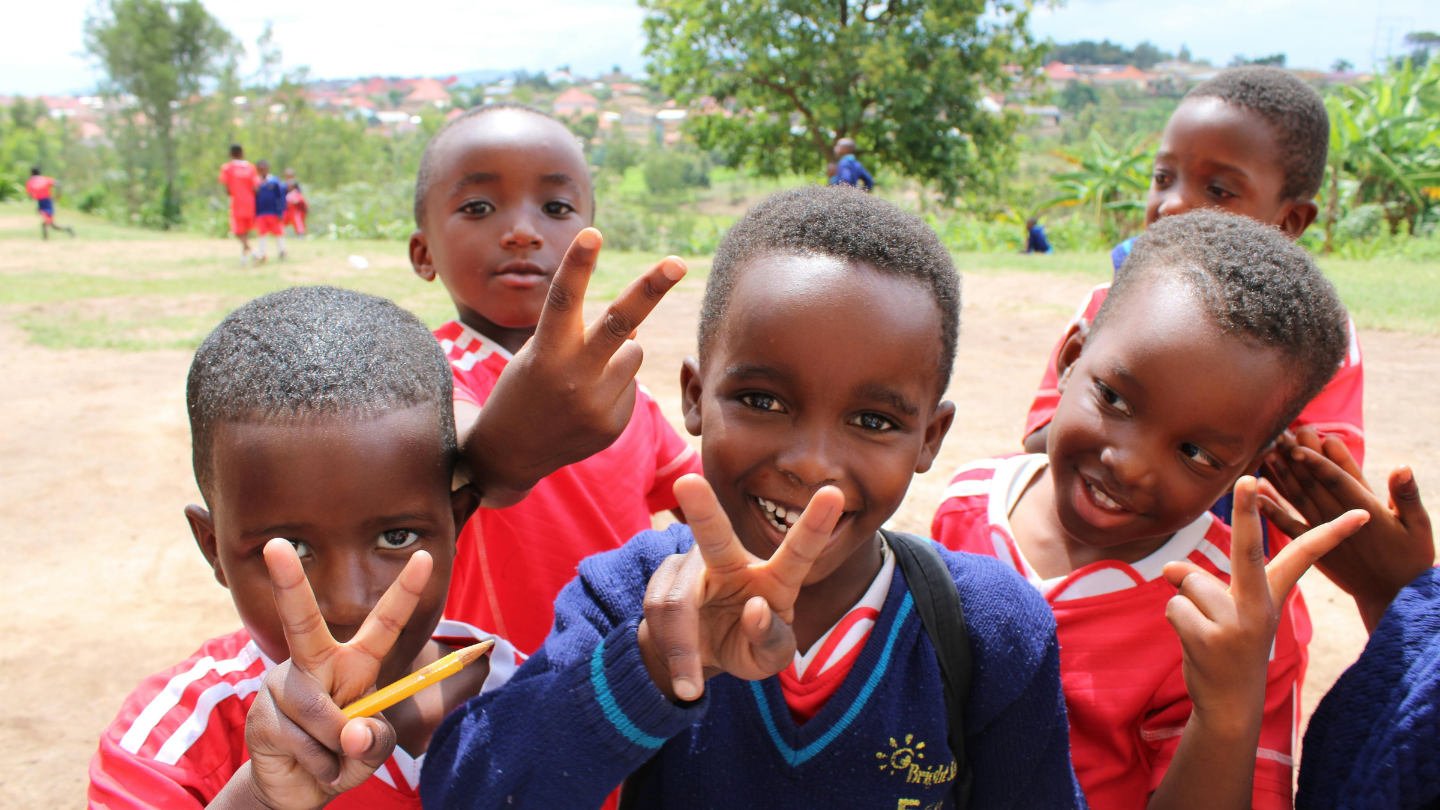
Every year on June 16, the world marks the International Day of the African Child, a day that traces its roots to the 1976 Soweto uprising, when thousands of South African students took to the streets to protest an education system designed to limit them. The day has since grown into a global moment to examine what access to education actually looks like for African children today.
The honest answer is that it depends almost entirely on the circumstances a child is born into.
For children growing up in stable homes with consistent caregivers and reliable resources, education tends to follow a predictable path. For orphaned and vulnerable children (those who have lost parents, live in child-headed households, or face the kind of instability that comes with poverty and illness) the path is far less certain.
In the Kingdom of Eswatini, a small landlocked country in southern Africa, roughly one in four children has lost one or both parents, largely due to the impact of HIV/AIDS. Understanding what education looks like for those children, and what it takes to make it accessible, is at the heart of everything we do at Heart for Africa (Canada).
Why Education Is Particularly Fragile for Vulnerable Children
Access to school is not simply a matter of whether a school exists nearby. For children without stable parental care, the barriers are layered and interconnected.
School fees, uniforms, and basic materials create financial obstacles that families already stretched by poverty often cannot absorb. Even when costs are managed, instability at home (i.e. absent caregivers, inconsistent nutrition and more) disrupts the continuity that learning requires. Children in child-headed households, where an older sibling has taken on the role of primary caregiver after parental loss, often drop out early not because education is unavailable but because survival takes precedence.
In Eswatini, these realities are compounded by structural challenges that are among the most severe in the world. The country carries the highest rate of HIV and AIDS globally, a crisis that has orphaned an entire generation of children and left extended families caring for far more dependents than they were built to support. Unemployment sits at approximately 70 percent. The economic and social pressure on families is not occasional, it is persistent and cumulative.
For a Canadian donor trying to understand where their support matters, Eswatini represents a context where the need for long-term, structured care and not just emergency relief is clear. Short-term interventions don’t address the conditions that make education inaccessible in the first place. What is needed is a stable environment, built for the long term, where children can grow and learn without the disruptions that define so many vulnerable childhoods. That is what we have spent more than a decade building at Project Canaan.
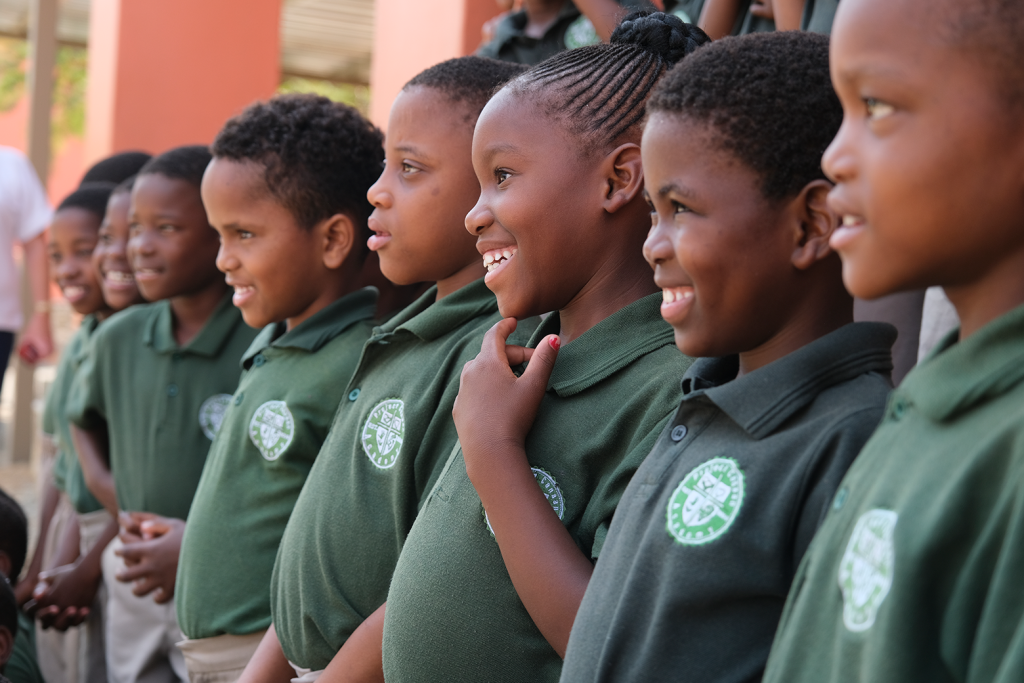
Project Canaan Academy: A School Built Around Our Students
At Project Canaan, our 2,500-acre sustainability project and children’s community in Eswatini, education is not an add-on to the care model. It is built into it.
Project Canaan Academy is our on-property school, and every school-aged child in our care attends. Currently, that means 370 children out of the 460 in our care are old enough to attend. Each child is placed with us through the Eswatini social welfare system and a formal court order, each arriving before the age of two, each growing up within a community designed to provide the stability their circumstances denied them.
Because every child lives on the property, the barriers that prevent so many vulnerable children from attending school simply don’t exist here. There are no fees. There is no distance to travel. There are no mornings where an empty stomach or an absent caregiver means a child stays home. Education happens as part of a daily rhythm that is consistent, supported, and designed around the needs of children who have already experienced significant disruption in their early lives.
The Academy currently operates through Grade 8, which in Eswatini marks the beginning of high school. The oldest children in our care are 15 years old and that is not a coincidence. Our school does not exist as a fixed institution that children grow into. It grows with them. As our cohort ages, we add new classrooms, open new grade levels, and expand to meet the children where they are. By the time the current cohort reaches Grade 12, the Academy will have grown alongside them.
This is what a long-term care model looks like in practice – not a facility that serves a static population, but a school that evolves alongside the community it was built for.
Stability as the Foundation for Learning
What distinguishes Project Canaan Academy from a standalone school serving vulnerable children is the environment surrounding it.
Children in our care arrive before age two and are raised in family-style homes with consistent, trained caregivers. They do not move off the property as they grow. They do not experience the sudden losses of connection that characterize many institutional care settings. By the time they are old enough to begin school, they have spent years in an environment that provides the predictability (in food, in routine, in relationship) that early childhood development requires.
The research on education outcomes for children in care is consistent on this point: academic progress is closely tied to the stability of the environment outside the classroom. A child who arrives at school hungry, anxious, or grieving is not a child who is positioned to learn, regardless of the quality of instruction. At Project Canaan, the work of creating stable conditions for learning begins long before a child walks into a classroom.
What Comes After School
One of the commitments we are most proud of in our care model is what happens when formal schooling ends, once our children are old enough for us to implement this.
For many care models, support concludes at 18. Young people are released into communities without the family networks, financial resources, or practical skills that most of their peers have had years to develop. The transition is often abrupt, and the outcomes are frequently poor.
Our Bridge Program will extend support from ages 18 to roughly 21, providing young adults with a structured pathway into employment, further education, or a vocational trade. On the property, vocational training programs (including a working mechanic shop and our Khutsala Artisan Centre, which provides employment for more than 100 community members) offer practical skills alongside the formal education of the Academy.
Our goal is not simply to educate children. It is to equip young adults to re-enter Eswatini as capable, contributing members of their communities. Education is the foundation. The Bridge Program is what ensures that foundation leads somewhere.
Why This Matters for Canadian Donors
On the International Day of the African Child, it is easy to mark the moment with awareness. What is harder, and more valuable, is asking what genuine support for African children’s education actually requires.
It requires more than a school building. It requires the stable home that makes consistent attendance possible. The caregiver who ensures a child arrives fed and ready to learn. The long-term funding commitment that allows a school to grow from Grade 1 to Grade 12 over the course of a generation. The transition program that ensures education leads to opportunity rather than an abrupt drop into an unsupported adulthood.
Canadian donors increasingly want to know that their giving produces durable results, not a short-term intervention that addresses a symptom while the underlying conditions remain unchanged. Research from Imagine Canada consistently shows that Canadians are moving toward community-rooted, accountable giving. Project Canaan’s integrated model, where education is one part of a larger system of long-term care, is built to answer that expectation with specifics rather than generalities.
The children growing up at Project Canaan today are the first full cohort to experience this model from the beginning. Our school will reach Grade 12 as they do. The Bridge Program will meet them at the other end. What happens in between is shaped, in part, by the ongoing support of donors in Canada who understand that meaningful change in a child’s life is not the work of a moment – it is the work of years.
If you would like to understand how child sponsorship through Heart for Africa (Canada) supports the children in our care, including their education, housing, healthcare, and long-term development, we invite you to learn more.
To stay connected with updates from Project Canaan and the work of Heart for Africa (Canada), you can subscribe to our newsletter below.